Wednesday, August 31, 2011

Architecture selection

My own house under moonlight


Phoenix House, Queens gardens


Jackson residence, Arrowtown


Small Poppy pizzaria, Port Chalmers


interior, real estate work


interior, real estate work

Interior, real estate work


exterior, real estate work


Clubhouse, Millbrook Estate, Arrowtown


Majestic Mansions, St Clair 


St Clair Resort hotel, brochure image


Orokonui Ecosanctuary


Saturday, March 19, 2011

Careys Bay

I was asked if I had some images of Careys Bay.
I had a dig around and came up with these ones.

Slant St

Careys Bay pub mast pan

Careys Bay jetty pan

Careys Bay fishermans wharf - 3 week solagraph

Careys Bay view north - 6 month solagraph

Rocky Point (near Careys Bay) - long exposure of ship


Monday, July 19, 2010

MOMENT exhibition on-line

Aramoana from Taiaroa

Robbie

Priory II


Priory I

MOMENT exhibition on-line

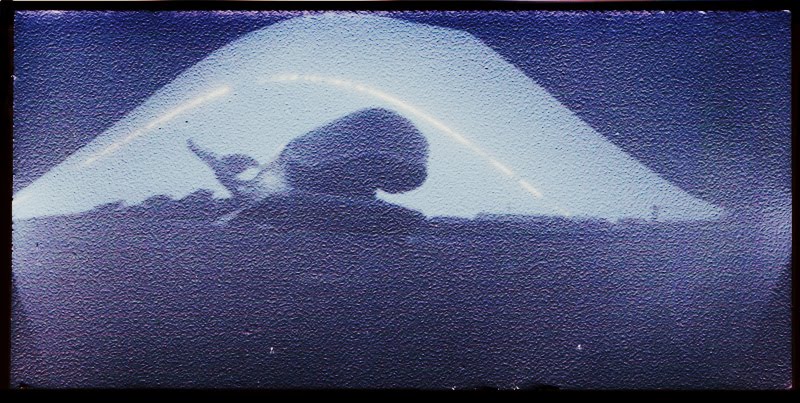
Whale

Fisherman's wharf
Repair wharf

Gantry


Boatshed, Deborah Bay

MOMENT exhibition on-line

St Leonards II

1952 Commer 15cwt

Roseneath

Reynoldstown Rd


Mihiwaka

Saturday, June 19, 2010

Studio practice workbook 7.

The Temple Gallery, 29 Moray Place


Locating a gallery to present this exhibition was, typically for me, left until the last minute. There are good reasons not to do this such as the fact that galleries like to book shows months ahead of the opening. Perhaps I was relying on the serendipity factor too much but luckily I was able to find a spot in a prestigious Dunedin gallery, The Temple Gallery.


The corridor where the Moment show will hang


The Temple Gallery's owner, Victoria Timpany, told me she knew my work from my earlier exhibitions and that photography was becoming more sought after by New Zealand art collectors. Normally a new artist would be introduced in the Christmas group show and then perhaps have a solo show some months later, I was told. I made a plea for any chance to show in the next month because the show was part of my Dip Grad FA course at Art School. Luckily, again, there was an open slot due to a cancellation and Victoria needed to cover this so I was able to be in the main gallery on short notice.

The plan at this stage was to pin the prints directly to the wall. The meant there was no need to frame or mount the works which I thought was another task ticked off.

This was not the case however. Because of the flux due to the cancelled show the time and location shifted again. I was now to show in the entrance corridor which did not have gallery lighting and the walls were not suitable to pin works to. I was worried at first by the dim lighting but then decided that it may actually suit the murky, indeterminate nature of my images. However, I did now have to come up with another hanging system.

Jacque Gilbert had previously used aluminium sheet as a backing material for photographs when she lived in Amsterdam and had recommended it to me. She had been working on finding suppliers and coming up with a technique to do this in Dunedin when I had a sudden need to mount the works that were going into the Moment show. After a successful workshop session I got my own materials and set to work at home. This involved getting sheets of .9mm aluminium plate cut to specific sizes.


They are prepared for gluing by sanding the surface with 600 grit wet&dry sandpaper.


A thin layer of modified EVA glue is rolled on and then the plate is placed onto the back of the print which I had marked to facilitate lining up.


The plate is placed in a press and pressure applied.


I used an old cast iron book press and thought a warm press might provide a superior bond so placed it on top a heater.


After about an hour the plate is replaced with the next one to go into the press. Once the glue had cured overnight I trimmed the surplus paper around the edge of the plate.


I marked the back of the plate with guide lines and then used superglue to fix a length of 10mm open box section aluminium. This was to provide an edge to hang the work from as well as to stiffen it.

The prints themselves are made with my own Epson R800 printer using epson inks and paper selected from the Hahnemühle Fine Art A4 sample packs. The variety in the packs allowed me to match particular effects and textures in the image to the surface it was printed on.

The date for the opening was changed to Monday which may have seemed an awkward day for an art exhibition but it was also the eve of winter solstice and so was deserving of celebration in it's own right. When handing out the exhibition flyer I told people to expect mulled wine.

Winter solstice is the time of year when we solargraphers find ourselves busy. It is the peak of the suns cycle and the chance to set cameras out in the wild in order to get a full six months exposure in the can. It also marks the end of my one year Graduate Diploma of Fine Arts course at the Otago Polytechnic School of Art.

Mihiwaka

Studio practice workbook 6.


When I first read about solargraphy I knew that I would become an enthusiast. It is in many ways the antithesis to digital photography in that the equipment is scrounged or made cheaply, the time periods involved are astoundingly long in comparison and the in-camera results are completely unique and unreproducible. All this suited me for one reason or another but I was also attracted to working without a digital camera. I often have a feeling of a kind of nakedness if I’m out without my camera, worried that I will miss an unexpected opportunity for a great image. I don’t get that feeling if I have my camera bag full of charged pinhole cameras with me. If I can realise the beauty of the world one way or another, then I am relaxed. 

Perhaps the strangest attraction of this method of image making relates back to Matt’s bomb scare. Of course people are going to be suspicious of small objects in unusual places, perhaps even more so if it is realised that these are cameras. We live in an age where surveillance by the authorities is becoming more prevalent while at the same time police and security guards overstep their powers in preventing public photography in public places. That might be overstating the case in this country but it is a growing trend particularly in the United Kingdom and the United States as evidenced by the organised backlash to this by groups such as The Love Police. All the same, when I fix a pinhole camera in a public place I am aware that it might appear as a suspicious activity. The camera itself will not last long if it is in a position where it is easily noticed. The game that I play while setting out cameras is to try to out think the person who might spot it. I have learned to avoid placing them at eye height or on a plain surface where they will stand out. I often see a likely position for placement but must return there at a time of day when less people are around to see me place it. I will prepare the double-sided tape used to attach the camera and remove the tape covering the aperture slightly beforehand so that I can walk up to my chosen spot, attach the camera and walk away with barely a pause. It is the thrill of spycraft as taught by Le Carré, the exhilaration of trying not to be caught in the act. It’s a kind of guerrilla photography. Now that the subject has been made national news and the police have stated that they want to be informed about such art projects the game’s stakes have been increased.

Solargraphy is an extension in both of those creative directions at once. It allows us an unblinking gaze at the view for a moment that lasts for months. It distorts the world to show a place like it never was and yet always is. We are reminded, if we think about it, how narrow the field of our perceptions are. And if we don’t think about it we are still presented with pretty pictures to gaze upon momentarily.


Creative Commons License
This work by Chris Reid is licensed under a Creative Commons Attribution-Noncommercial-No Derivative Works 3.0 New Zealand License.